
In Conversation With: Shannon Richards

Shannon Richards, founder of Hay Runner, blends artistry, practicality, and purpose in her work guiding property owners through the life cycle of ownership.
Shannon began her career as a sculptor and furniture maker — someone who has always “liked to make something from nothing.” That creative drive eventually led her to reimagine how real estate, architecture, and construction could come together more seamlessly. Today, Hay Runner simplifies the lifecycle of home ownership — buying, fixing, designing, building, maintaining, and selling — all under one roof. The idea grew from Shannon’s realization that the system most homeowners encounter simply doesn’t work: “It’s fragmented, it’s stressful, and it’s hard to find people you can trust.”
Our conversation explored how she’s using both customer feedback and her own experience to build a company — and an industry culture — that’s smarter, more human, and more sustainable.
Top three takeaways from this interview with Shannon Richards
Customer voice is the backbone of Hay Runner’s evolution. Shannon refines her model continuously through client feedback — from quick discovery calls to real-world pain points like coordinating a simple dishwasher installation.
Respect for the trades is central to her mission. Hay Runner aims to change how society views and values skilled craftsmanship, creating a culture that celebrates artistry, fairness, and mentorship.
Predictability and transparency are key to customer trust. Shannon believes that honest communication and clear expectations — even when the news isn’t what a client hopes to hear — are the foundations of a successful project and a better industry.
How do you describe what Hay Runner does?
I started Hay Runner to make real estate, design, and construction more accessible — for both clients and for the people who work in the trades. On one side, we simplify the process for homeowners who are trying to figure out where to begin. On the other, I wanted to create a great place to work for people who like working with their hands, their minds, and their creativity. It’s about taking the chaos out of home projects and building a company that respects both the client and the craftsperson.
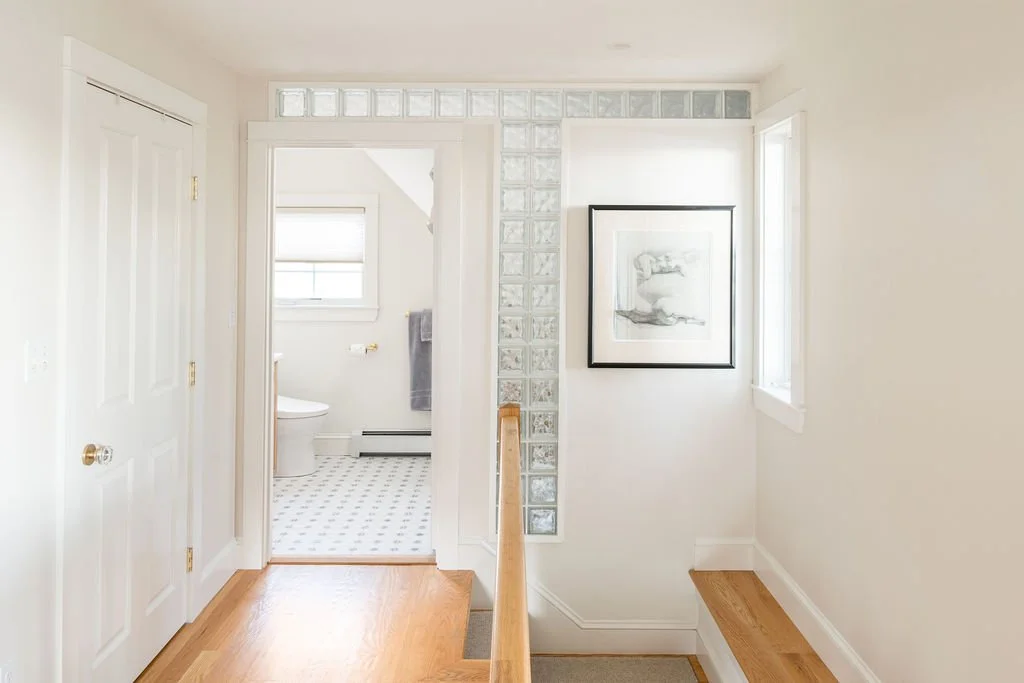
Photograph by Peter Morneau
What do you want this phase of your life to represent?
I think of myself as a collage artist — I’ve been collecting experiences, skills, and perspectives for years. Now I’m assembling them into something new. I hope that ten years from now, I can look back and say, I took all of that and turned it into a different way of doing business.
Was the integrated “one-stop” model part of your original vision?
Not fully. In the beginning, I just knew I wanted to do smaller projects with the professionalism and reliability people associate with larger companies. The homebuilding world is full of talented tradespeople — but many small contractors operate on thin margins, without the structure to grow or the security clients need. I wanted Hay Runner to bridge that gap: to be approachable for a homeowner who needs a deck or kitchen renovation, but also equipped to take on bigger, design-build projects. Over time, client feedback reinforced that. People kept saying, “Thank you — I didn’t know who to call first. This makes it so much easier.” That validation told me we were solving a real problem.
How has customer feedback influenced how you operate?
Almost everything we do has been refined by what clients tell us — directly or indirectly. Early on, people loved that we could handle multiple steps in a project instead of them having to coordinate five different contractors. A great example: someone needed a new dishwasher installed. Home Depot wouldn’t remove the old one for fear of damaging the cabinetry, which meant she would’ve had to find an electrician, a handyman, a plumber, and then someone to fix any cabinet damage. Instead, she called us, and we handled the entire chain of work. It seems simple, but it’s what people need — one accountable point of contact. That kind of feedback is gold. It proves that simplifying the process isn’t just convenient — it’s essential.
You’ve also talked about wanting to elevate the trades as a career path.
Yes, that’s really important to me. Somewhere along the way, we started devaluing skilled trades — telling young people that college was the only “right” path. But there are so many talented people who love working with their hands, their minds, and their bodies together. I’d love to help reframe the trades as something aspirational again — through mentorship, apprenticeship, fair pay, and visibility. I want people to see that craftsmanship is art, and it deserves respect.
What’s changed most since you launched in 2018?
Experience has made us more precise. After hundreds of projects, we have the data to estimate accurately. When someone calls, we can give realistic next steps and ballpark costs in a fifteen- minute “discovery call.” That efficiency — turning a call into a contract into cash quickly — sets us apart. It’s also how we learn. Every conversation is research. I ask questions that seem casual, but they tell me everything I need to know about where a client is in their process — experienced, exploring, or brand new.
Have you ever had to turn down work because of what you learn in those calls?
Yes, absolutely. Transparency matters. If someone’s expectations are way out of line with reality, I tell them up front. I’d rather have an honest ten-minute conversation than a drawn-out disappointment. People appreciate candor.
Final question — chocolate or garlic?
Oh, that’s hard! But I’ll go with chocolate. I’ve always been a sweets person — and I highly encourage others to be sweet people, too.
